
CareCruiser
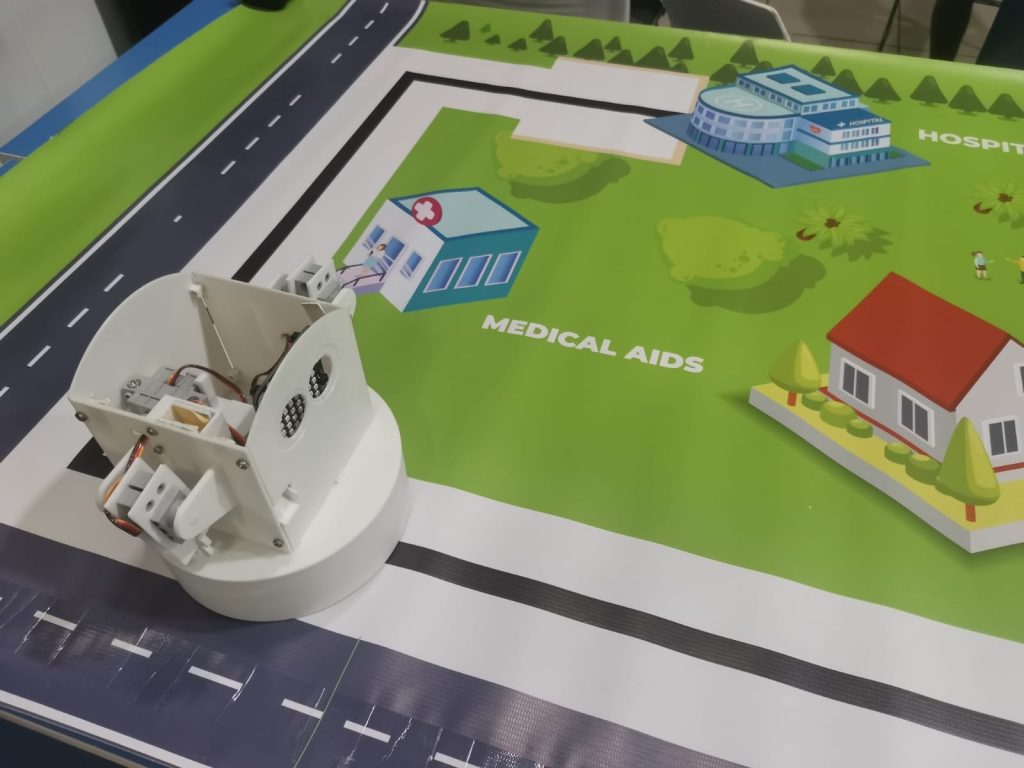
CareCruiser is an autonomous medicine‑delivery robot developed by Team HoverX to modernize and streamline healthcare logistics. Designed and programmed using PictoBlox, CareCruiser combines AI‑powered decision‑making with reliable robotic engineering to navigate hospital environments safely and efficiently. The current version of the robot uses a line‑following navigation system, enabling it to stay on designated hospital pathways with high accuracy. This is supported by an integrated obstacle‑detection system that allows CareCruiser to avoid collisions and adapt to dynamic surroundings, ensuring smooth and uninterrupted delivery routes.
To protect medication during transport, CareCruiser includes a secure, tamper‑proof storage compartment. Its user‑friendly interface allows nurses and medical staff to interact with the robot easily, making it a practical tool for real‑world healthcare settings. By automating routine delivery tasks, CareCruiser reduces the workload on medical professionals, minimizes human error, and ensures timely medication distribution.
Aligned with UN SDG 3: Good Health and Well‑Being, CareCruiser aims to enhance healthcare efficiency and support medical teams in hospitals, clinics, pharmacies, senior‑care homes, disaster‑relief centers, and remote or underserved regions where timely access to medicine is essential.
Looking ahead, Team HoverX plans to integrate maglev (magnetic levitation) technology into future versions of CareCruiser. This advancement will reduce friction, increase speed, and enable smoother, more energy‑efficient movement—pushing the boundaries of autonomous medical‑delivery robotics.
MoneyMate

MoneyMate is a smart app that teaches teens saving, spending, and budgeting through fun real-life simulations and goal-based learning.
It promotes financial awareness and supports Tech for Wellness and Equity by giving every teen access to essential money management skills.
LifeGlide – Innovative Wireless Wheelchair for Human Well-Being
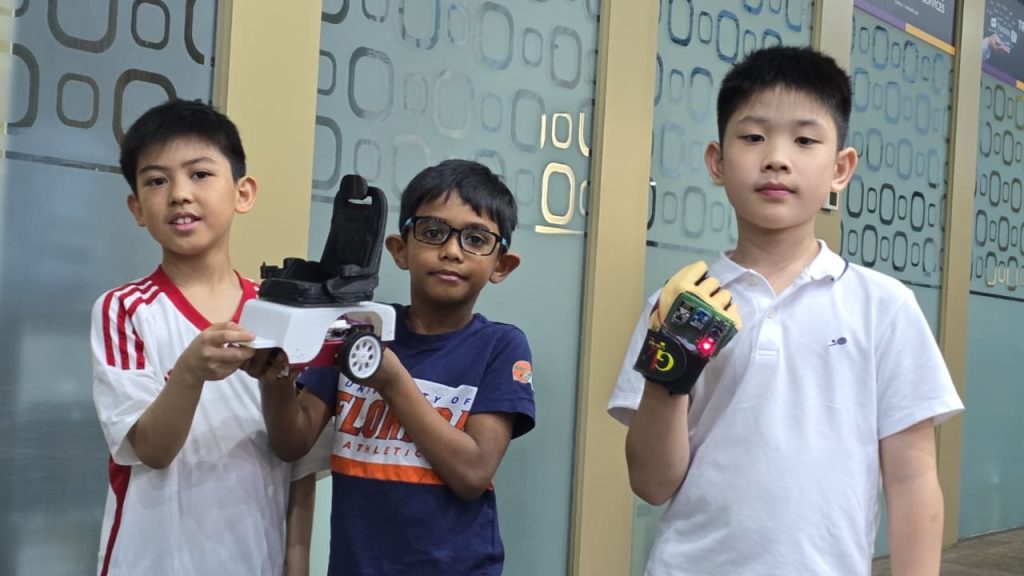
LifeGlide is an innovative wireless wheelchair designed to enhance mobility, independence, and overall well-being for individuals with physical disabilities. Many users of traditional wheelchairs face challenges such as physical strain from manual operation or difficulty using joystick-based controls in motorized systems. These limitations often increase dependency on caregivers and affect the user’s confidence and mental health.
LifeGlide addresses these challenges by introducing a gesture-controlled mobility system powered by Arduino and programmed using PictoBlox. The wheelchair uses motion sensors to detect simple hand gestures, allowing users to control movement naturally and effortlessly. For example, moving the hand forward makes the wheelchair move forward, while backward and side tilts enable reverse motion and smooth turning. This intuitive control system makes navigation easy to learn and accessible for users with limited motor abilities.
The system operates wirelessly, eliminating the need for complex controls and improving user comfort. To ensure safety, LifeGlide incorporates ultrasonic sensors that detect obstacles in real time. If an object is detected within a critical distance, the wheelchair automatically stops, preventing potential collisions.
LifeGlide not only improves physical mobility but also enhances mental well-being by restoring a sense of independence and confidence. It reduces reliance on caregivers and allows users to move freely in their environment. Overall, this project demonstrates how smart, affordable technology can create inclusive solutions that empower individuals and improve quality of life.
AgriSentinel – Futuristic Smart Farming & Environmental Monitor
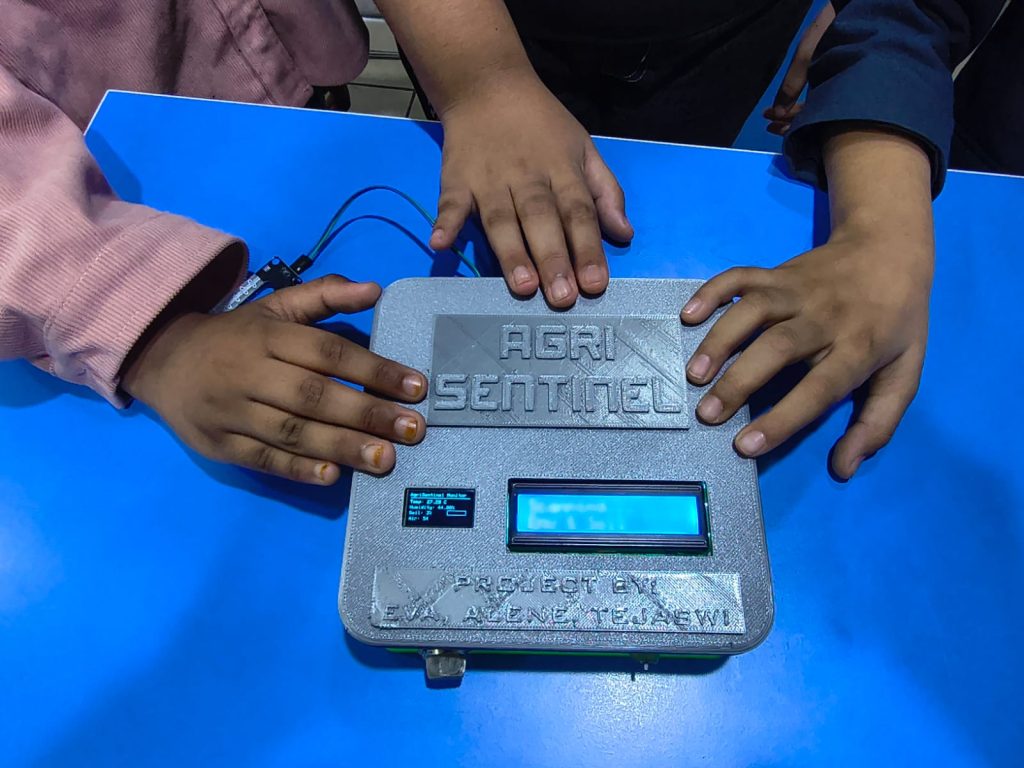
AgriSentinel is a futuristic smart farming and environmental monitoring system designed to help farmers make informed decisions in real time, even in extreme conditions such as conflict zones or natural disasters. Farmers often rely on general weather forecasts or guesswork, which can lead to crop damage, inefficient irrigation, and reduced productivity. In areas where infrastructure is damaged, accessing reliable data becomes even more difficult.
AgriSentinel addresses these challenges by providing localized, real-time environmental data using an Arduino Uno system programmed with PictoBlox. The device integrates multiple sensors to monitor critical farming conditions. A soil moisture sensor measures the exact water content in the soil, helping farmers optimize irrigation. A DHT11 sensor tracks temperature and humidity levels to maintain suitable conditions for crop growth. Additionally, an MQ135 sensor monitors air quality, ensuring a healthy environment for plants.
All sensor data is displayed instantly on an LCD screen, allowing farmers to take immediate action without depending on external networks. The system is designed to be affordable, portable, and easy to use, making it suitable for deployment in remote or disrupted environments.
By enabling data-driven decisions, AgriSentinel helps reduce crop losses, improve yield, and promote sustainable farming practices. It also reduces stress by providing reliable insights directly from the field. Overall, this project demonstrates how simple and accessible technology can transform agriculture and support farmers in challenging situations.
Smart Blind Cane
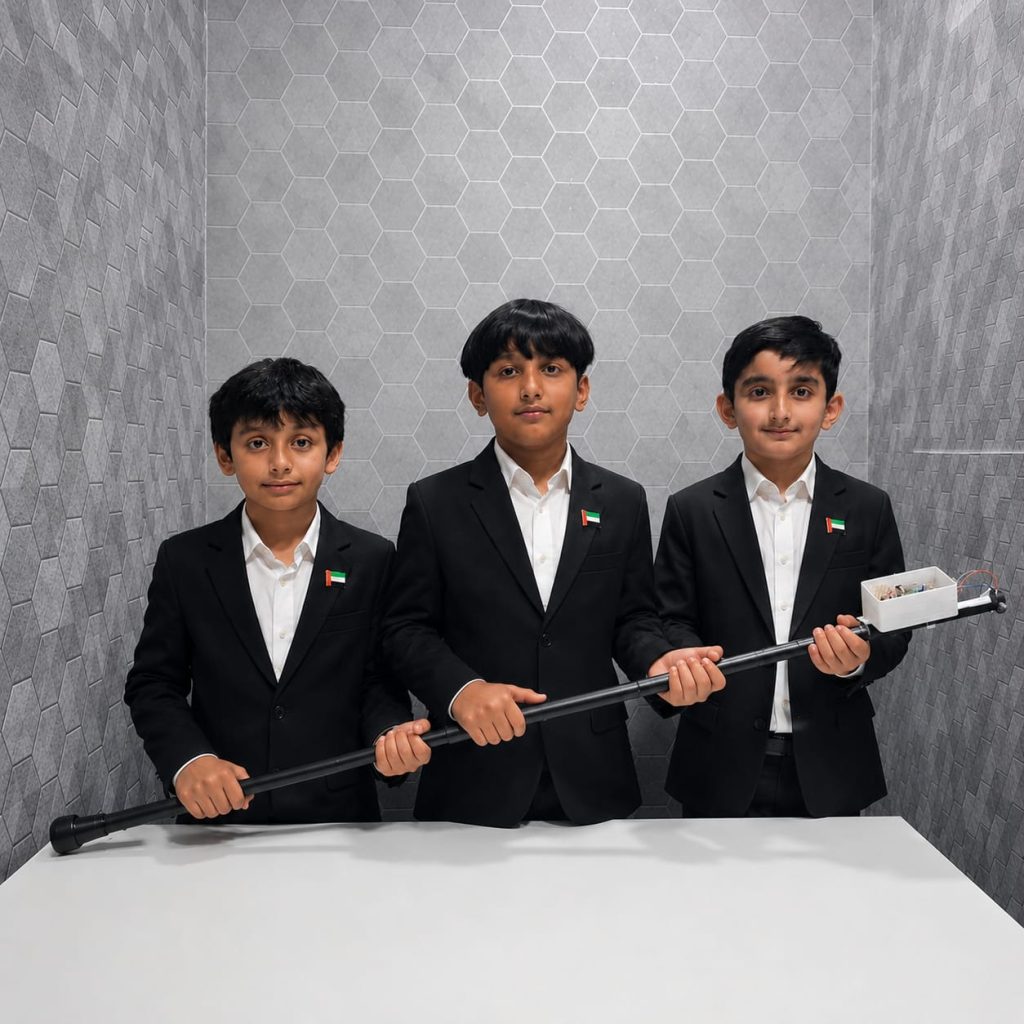
Smart Blind Cane is an assistive device designed to improve mobility, safety, and independence for visually impaired individuals. Navigating daily environments can be challenging due to obstacles, uneven surfaces, and crowded spaces, which increase the risk of accidents. Traditional white canes help detect ground-level objects but are limited in identifying dynamic or distant obstacles.
This project uses Arduino hardware and PictoBlox programming to create an intelligent system that provides real-time obstacle detection and alerts. The cane is equipped with ultrasonic sensors that continuously measure the distance between the user and nearby objects. When an obstacle is detected within a predefined range, the system activates multi-sensory alerts, including vibration and buzzer sounds. The intensity of these alerts increases as the object gets closer, allowing the user to understand proximity and react accordingly.
The system is customizable, enabling adjustments to sensor sensitivity based on the user’s environment. Additionally, the design allows for optional integration with GPS technology for improved navigation in larger areas.
Smart Blind Cane enhances safety by reducing the chances of collisions and injuries. It also improves user confidence by enabling independent movement in unfamiliar environments. By combining simple hardware with intelligent programming, this solution provides an affordable and practical assistive technology.
Overall, this project demonstrates how innovation can empower individuals, promoting inclusivity, safety, and better quality of life through accessible technology.
Smart Guart AI Stick
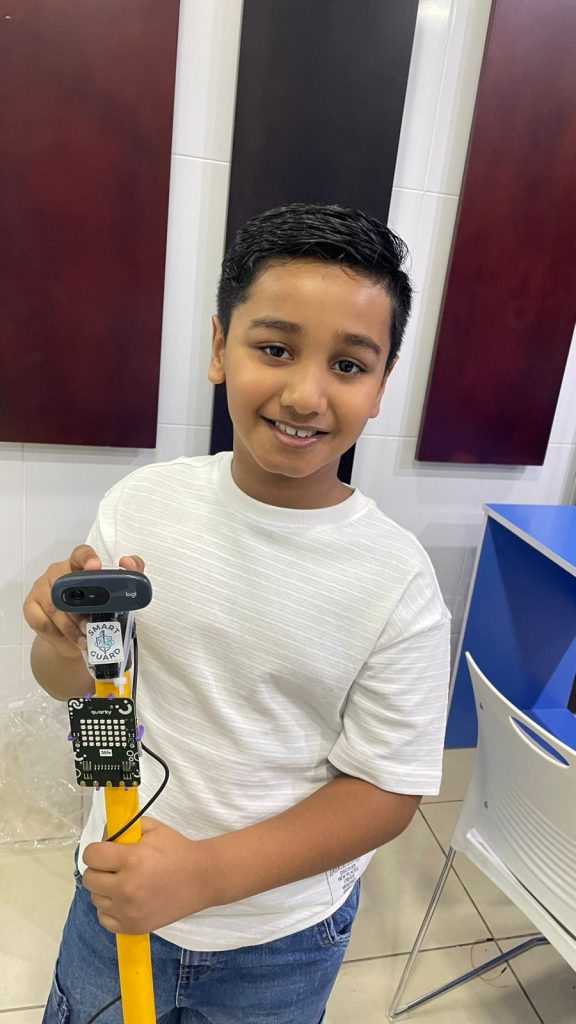
Smart Guard is an intelligent assistive device designed to turn a traditional white cane into a high-tech navigation tool. While standard canes help people feel obstacles on the ground, they cannot “see” traffic lights or safety signs. My innovation bridges this gap by using Artificial Intelligence to give both blind and visually impaired individuals real-time awareness of their surroundings.
The system is built on a Quarky microcontroller with a camera module mounted near the handle. Using Google’s Teachable Machine and PictoBlox, I trained an AI model to recognize critical markers like Red and Green traffic lights, cycle lanes, and safety signs such as “Wet Floor” and “Work in Progress.” The “brain” of the stick processes these images, providing instant voice alerts so the user can “hear” the world.
To make the stick a true personal assistant, I integrated two special buttons. One button tells the user the current date and time, and the other gives a live weather update. This helps the user plan their journey and stay on schedule without needing extra gadgets.
By using affordable components, Smart Guard offers a low-cost solution for safer navigation. It moves beyond simple touch-sensing to provide true contextual awareness. This project shows how AI can help people with low vision or total blindness navigate complex environments with more independence and confidence
Protect +
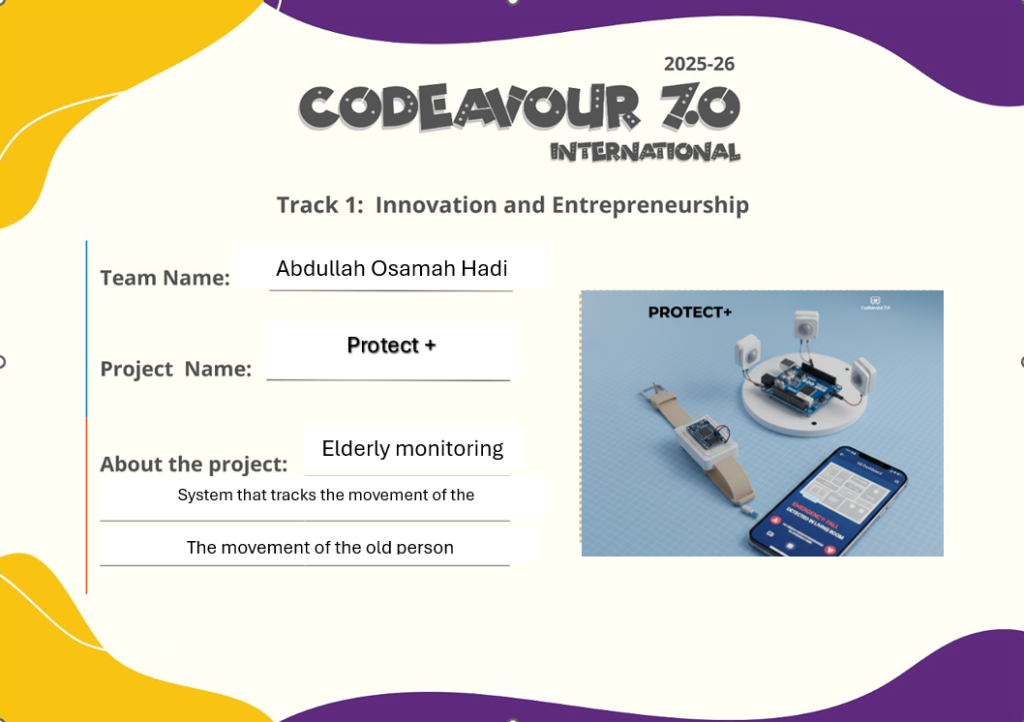
Protect+ is an innovative safety solution designed to protect elderly individuals by combining wearable technology with a smart mobile application. The project is centered around a lightweight wristband equipped with advanced sensors that continuously monitor movement patterns and detect sudden falls or unusual activity.
When such an event occurs, the system automatically triggers an alert that is instantly sent through the mobile application to designated family members or caregivers. This rapid communication ensures quick response, reducing the risk of serious injury and providing peace of mind for both the elderly and their loved ones.
Protect+ focuses on accessibility, reliability, and ease of use, making it comfortable for everyday wear without causing any inconvenience. By integrating modern sensor technology with real-time alerts, the project creates a reliable safety network that allows families to care for their elders proactively while supporting their independence.
Ultimately, Protect+ bridges technology and compassion, ensuring that no emergency goes unnoticed.
Smart Care AI
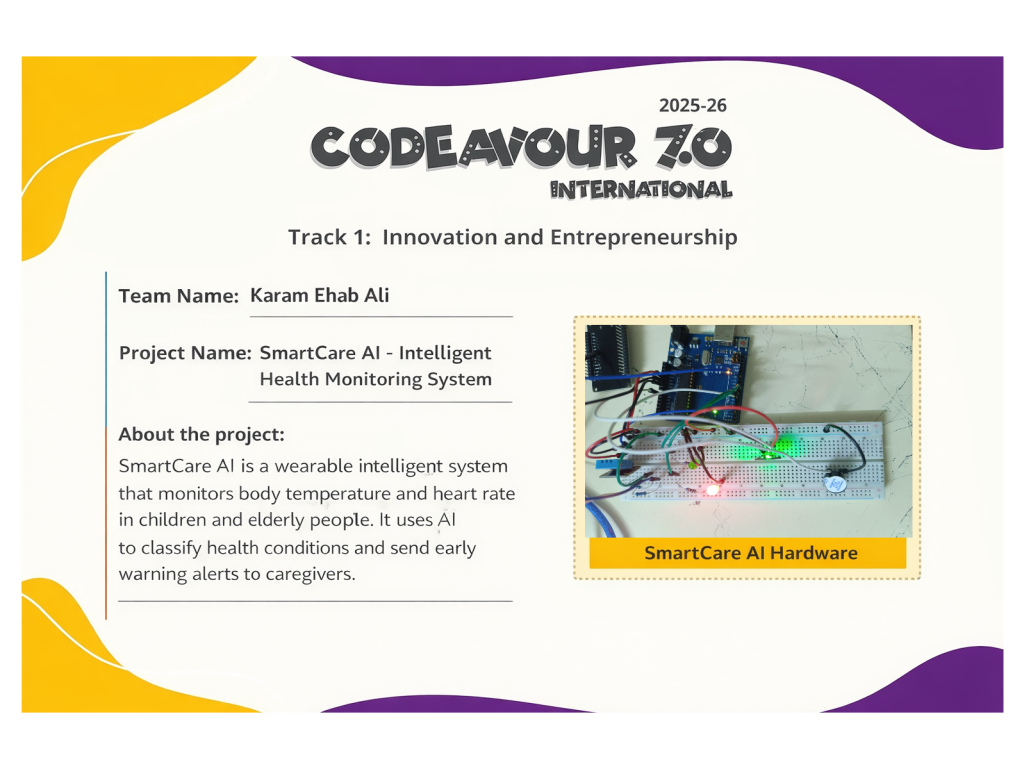
Smart Care AI is an intelligent health monitoring system designed to protect children and elderly individuals from sudden health risks, particularly during sleep. Many children and elderly people can develop a fever or experience abnormal heart rates without immediate notice from parents or caregivers, and delayed detection can lead to serious health complications.
This project introduces a low-cost wearable device that continuously monitors body temperature and heart rate using advanced sensors. The collected data is then analyzed through Artificial Intelligence algorithms, which classify the individual’s health condition into three categories: Normal, Warning, and Critical.
Whenever abnormal readings are detected, the system immediately sends alerts to caregivers via a mobile application or an alarm system, enabling rapid response and early intervention.
Smart Care AI is designed to be affordable, simple, and accessible, making it suitable for use in homes, schools, and care centers. By combining wearable technology with AI-driven analysis, the project aims to provide early detection, enhance safety, and reduce health risks, ensuring that children and elderly individuals receive timely care whenever needed.
Burnout forcast system
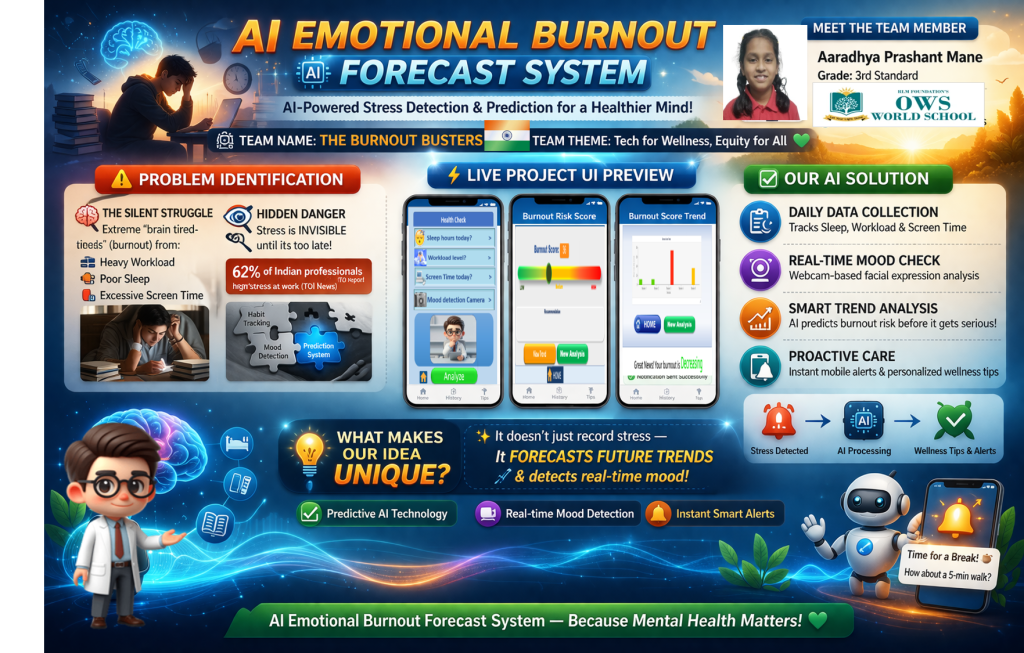
This project is a burnout detection system that analyzes sleep, workload, and screen time to calculate stress levels. It includes an AI chatbot with speech recognition, allowing users to interact using voice or text. The chatbot provides personalized suggestions, emotional support, and can show reports and trends, making the system interactive and user-friendly
Doctor Assistant
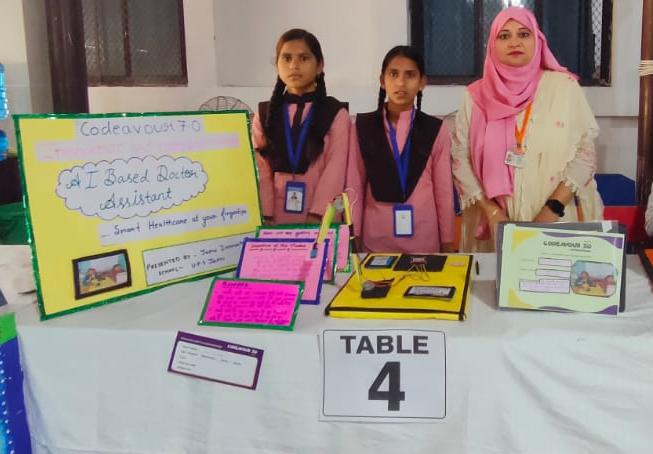
This project includes both hardware and software components.
It aims to provide a solution that makes hospital visits more convenient and hassle-free.
The system works as a self-doctor assistant for common diseases such as fever, headache, etc.
It also includes a temperature detection system using a DHT11 sensor to measure body temperature. Users can view real-time temperature data on the screen.