
Med robo 3.0
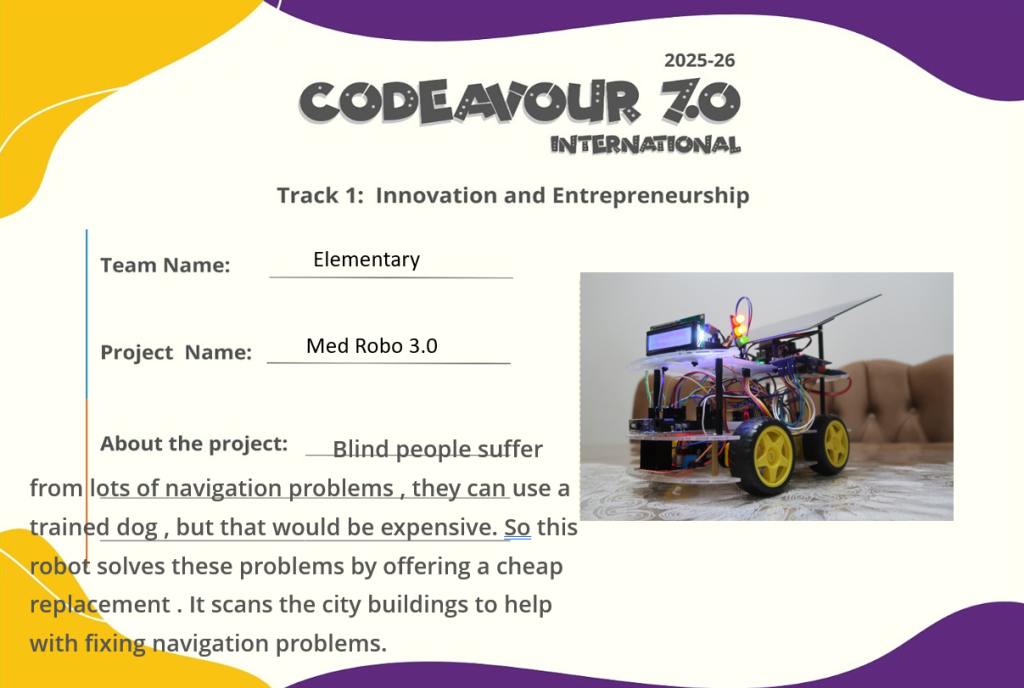
This project aims to help blind people in various ways, such as by helping them navigate places. How this robot works is to scan everything around it, like houses, shops, buildings, and inside the user’s house. Unlike normally trained dogs, this robot also serves as a helper.
Pros and cons of a dog
He is a living animal that the user can interact with
He always gets attracted to butcher shops and other places, such as supermarkets, and different smells
Pros and cons of robot
is not a living thing
It has more functionality than the dog
It also does NOT get attracted by meat and other foods and smells
Hardware used:
Arduino UNO R3
Motor controller
Breadboard
HM-05 Bluetooth module
Male to female cables (M-F)
Female to female cables (F-F)
Male-to-male cables (M-M)
safe breathe AI
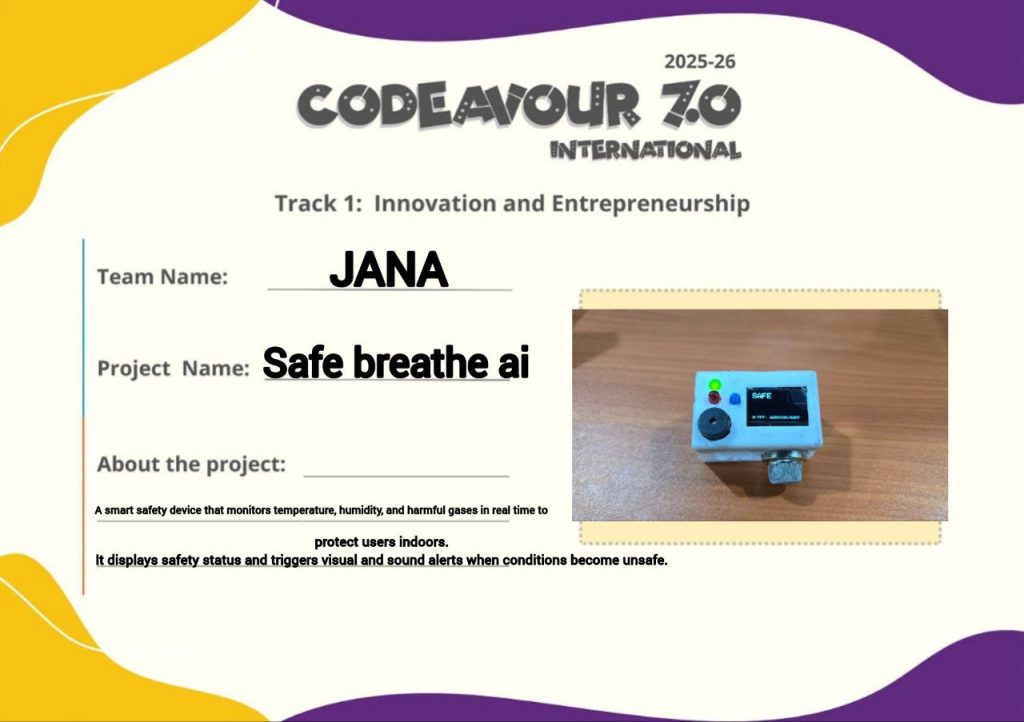
My project is a smart wearable/watch-style safety alarm that monitors the user’s environment in real time to protect health at home, in laboratories, or workplaces. The system uses sensors to measure temperature and humidity and to detect gas leakage and smoke, then continuously analyzes the readings. When all values remain within safe limits, the OLED screen shows SAFE and a green LED turns on to reassure the user. If any reading rises to an unsafe level, the device automatically switches to WARNING or DANGER, activates a red LED, and triggers an audible buzzer alarm, while displaying the cause of the alert and the measured values on the screen. The project is easy to use, low power, and allows adjustable alert thresholds to fit different environments. Its main goal is early hazard detection and reducing the risk of suffocation, poisoning, or harm caused by smoke, gas, or extreme temperature/humidity, providing a practical, low-cost solution that can be further expanded and improved.
Buddy Eye
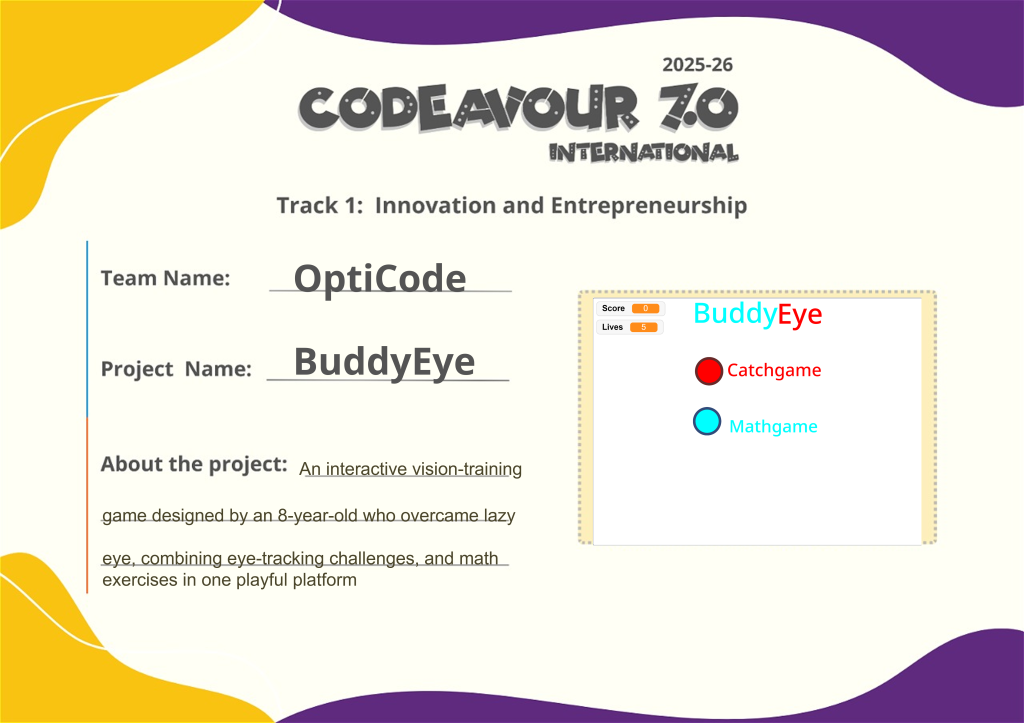
The idea for this project stemmed from a condition I’ve experienced since childhood: amblyopia, or lazy eye. This is a disease of the optic nerve in one eye that can lead to the loss of the affected eye if left untreated. I struggled with the traditional eye patching method of exercise, which involved patching the healthy eye and using the weaker eye for training and stimulation. However, this was tiring, often requiring me to interrupt the exercises and open the healthy eye. The lengthy duration of the exercises, sometimes exceeding three hours daily, was exhausting and tedious. Furthermore, improper execution of the exercises hindered the desired results, a consequence of the rudimentary method. My project aims to replace the traditional eye patching method with a smarter approach. Using software, I propose an electronic game that incorporates dual colors and allows for easy and enjoyable application of the exercises. This game uses glasses that assign a single color to each eye, fostering cooperation between the two eyes and enhancing the fun of the game. It acts as a companion, helping the child perform the exercises without boredom.
Pharmaware
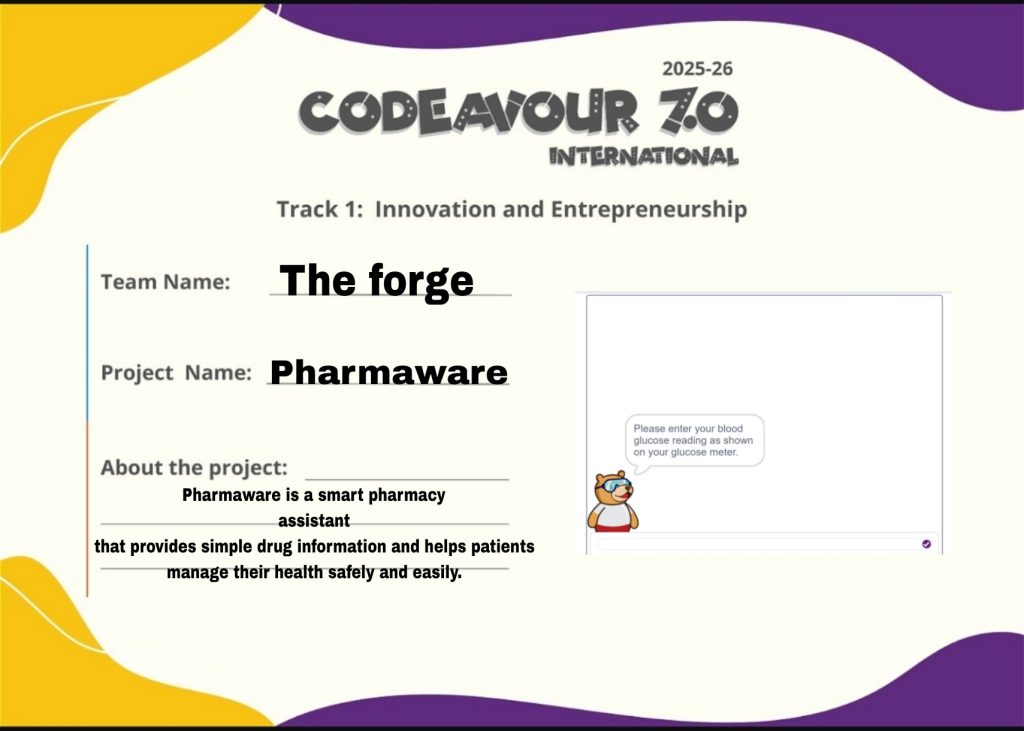
My project is a smart pharmaceutical assistant designed to make it easier to understand medication information and help patients and pharmacists access clear and simplified drug data. Many patients struggle to understand medical leaflets or determine the correct dosage, which may lead to medication errors. This system presents essential information about medicines such as their uses, important side effects, and the appropriate age group in a simple and easy-to-understand way.
It also helps patients deal with some common symptoms such as fever, nausea, and headaches by providing general and safe guidance. In addition, it supports diabetic patients by analyzing blood sugar readings and alerting them if the values are abnormal, helping to reduce potential health risks.
All information provided in this project is for educational purposes only and is not intended to replace professional medical advice. The prototype was developed using PictoBlox to demonstrate the concept and its potential to be developed in the future into a more advanced system based on artificial intelligence technologies.
In future versions, the system can be improved by adding new features such as assisting in reading and analyzing blood pressure measurements and sending regular reminders for medication schedules, making it more effective and useful for users.
emergency sign language
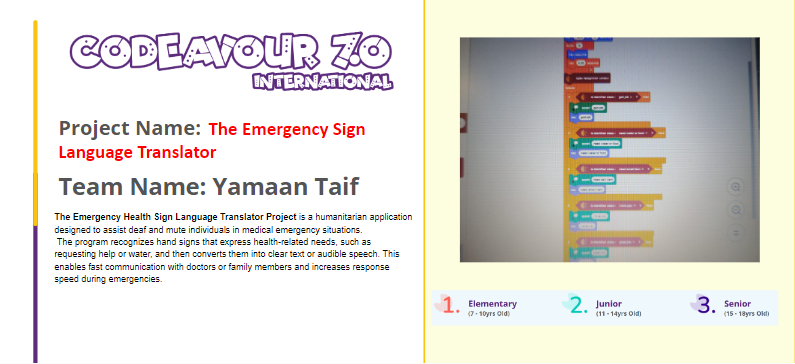
The Emergency Sign Language Translator project is a humanitarian initiative designed to help deaf and mute individuals during medical emergencies. It uses Hand Gesture Recognition technology to detect specific hand signs that express basic health needs, such as asking for help, feeling pain, or needing water. The program then translates these gestures instantly into clear text on the screen or an audible voice message, allowing faster communication with doctors or family members. This project is special because it supports an important group in society and helps them express their needs in critical moments, making emergencies safer and more effective for everyone.
EpiOsc
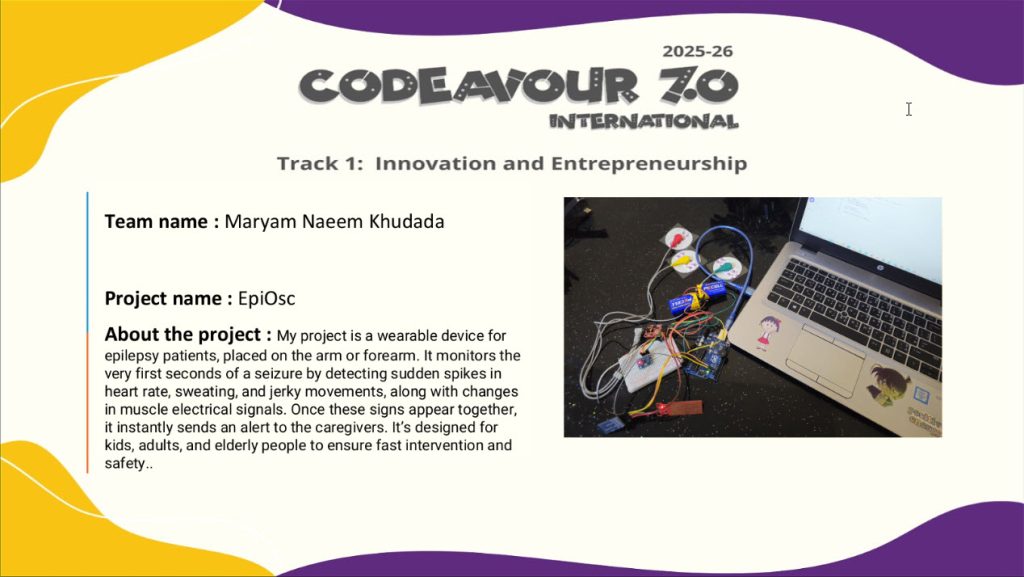
Epilepsy is a serious neurological disorder that affects millions of people worldwide. During a seizure, the patient may suddenly lose control of their body, fall, experience muscle convulsions, rapid heart rate, sweating, and temporary loss of awareness. If the patient is alone and does not receive immediate help, the consequences can be dangerous, including injuries, breathing difficulties, or even life-threatening complications. One of the biggest challenges is that seizures happen suddenly and without warning. Many patients remain without assistance during the most critical moments. Therefore, there is an urgent need for an affordable, accurate, and wearable device that can detect seizures instantly and alert caregivers in real time.
Project Idea and Description
This project presents a smart, low-cost, wearable seizure detection device designed to monitor multiple physiological signals simultaneously. Unlike traditional systems that rely on a single indicator, this device detects the sudden and simultaneous rise of key signs such as heart rate, body movement, muscle contraction, and skin conductivity (sweating). The system focuses specifically on sudden spikes rather than gradual increases, which helps distinguish epileptic seizures from normal physical activities like running or exercise. The device is compact, wearable on the arm, easy to use, and provides immediate alerts to a connected smartphone or emergency contact.
Tools and Components Used
– Microcontroller (e.g., Arduino or ESP32)
– Heart rate sensor
– EMG sensor (muscle activity sensor)
– Motion sensor (gyroscope)
– sweating(humidity) sensor
– Buzzer for alerts
– Bluetooth module for mobile connection
– Rechargeable battery
How It Works
The device continuously monitors the patient’s physiological signals. When the system detects a sudden and simultaneous increase in heart rate, muscle contraction, body movement, and skin conductivity, it identifies the pattern as a potential seizure. The algorithm is programmed to respond only to sharp and unexpected changes occurring at the same moment, reducing false alarms. Once detected, the device immediately activates an alert through a buzzer and sends a notification to a connected smartphone, allowing caregivers to respond quickly.
Project Benefits
– Affordable cost (approximately $45–$70), making it accessible to more patients.
– Higher accuracy by analyzing multiple signals at the same time.
– Reduces false alarms compared to single-sensor systems.
– Portable and wearable for daily use.
– Provides instant alerts, potentially saving lives.
– The project can be improved by integrating AI for better seizure prediction, adding GPS for emergency alerts, miniaturizing the device for comfort, and creating a mobile app to monitor real-time data and send notifications..
smart baby care
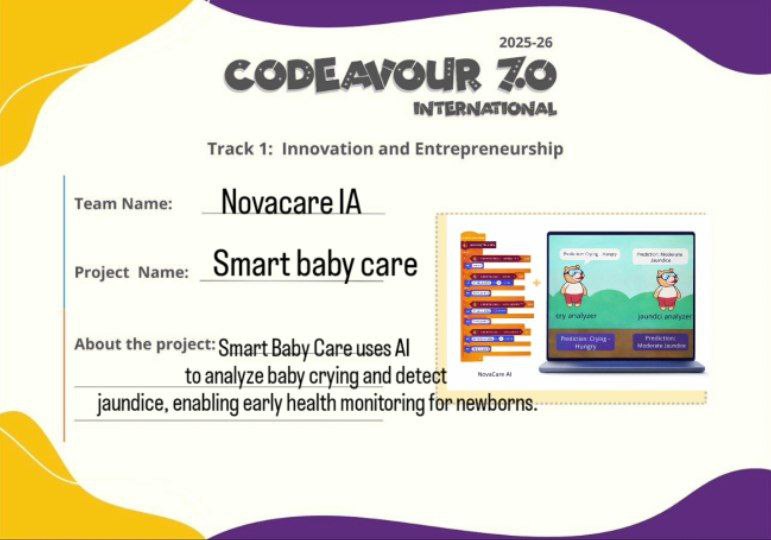
Smart Baby Guardian aims to help parents understand the real reason behind their baby’s
crying, as crying is the primary communication method of infants. Parents often struggle to
distinguish between crying caused by hunger, pain, fatigue, or illness, which may lead to
delayed or inappropriate responses. Therefore, this project utilizes Artificial Intelligence
and Machine Learning techniques to analyze crying patterns and classify them accurately.
The system was developed using PictoBlox, where diAerent audio samples of infant crying
are collected and manually categorized according to their causes (hunger, pain, illness,
discomfort, etc.). A Machine Learning model is then trained on these datasets to learn the
distinctive acoustic features of each type of cry. When the system is activated, the
microphone captures the baby’s crying sound, processes the audio signal, and extracts
important features such as frequency, intensity, and duration. The trained model analyzes
these features and instantly displays the predicted cause on the screen.
The system was developed using PictoBlox, where different audio samples of infant crying
are collected and manually categorized according to their causes (hunger, pain, illness,
discomfort, etc.). A Machine Learning model is then trained on these datasets to learn the
distinctive acoustic features of each type of cry. When the system is activated, the
microphone captures the baby’s crying sound, processes the audio signal, and extracts
important features such as frequency, intensity, and duration. The trained model analyzes
these features and instantly displays the predicted cause on the screen.
This project offers an intelligent tool that combines sound and image analysis to improve
prediction accuracy, reduce parental anxiety, and support early healthcare intervention
through practical AI applications.
Micro Sentinel
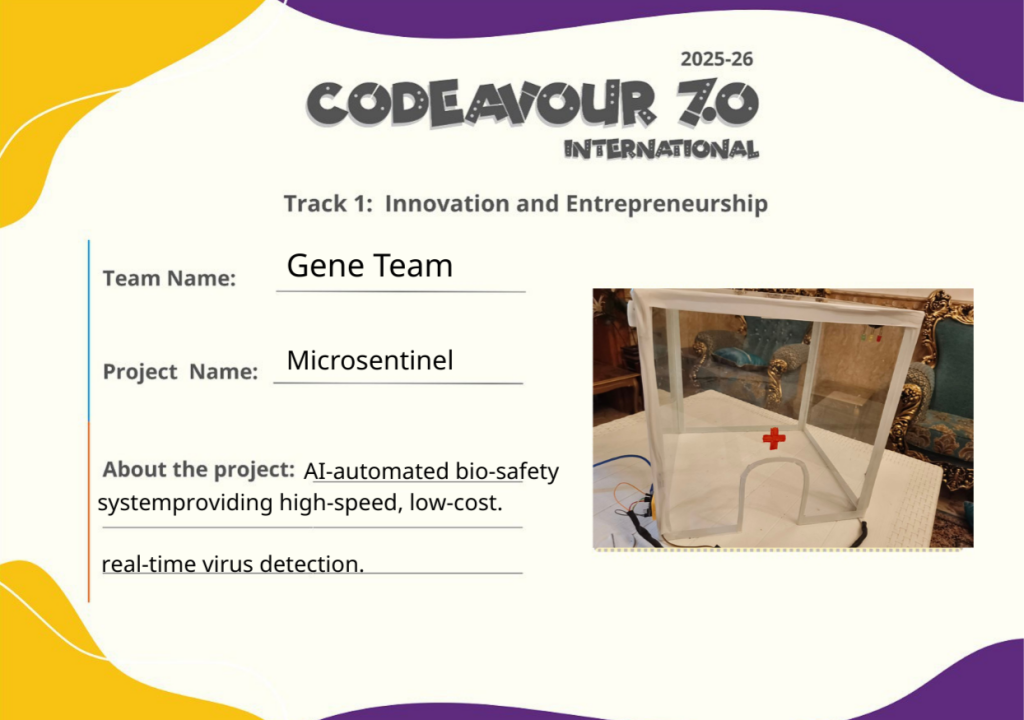
1. Technical Advantages
• Full Autonomous Decision-Making: Eliminates human intervention by enabling the software (PictoBlox) to trigger the hardware (Arduino) instantly upon threat detection.
• High-Precision Pattern Recognition: Utilizes AI to identify complex viral data patterns, significantly reducing false positives compared to manual observation.
• Hardware-in-the-Loop (HIL) Integration: Demonstrates a seamless bridge between digital intelligence and physical execution, a core principle of advanced robotics.
2. Practical Utility
• Automated Bio-Containment: Acts as a fail-safe in laboratories by triggering immediate physical lockdowns to prevent the accidental release of pathogens.
• Real-Time Response: Provides millisecond-level reaction times, ensuring containment is achieved far faster than humanly possible.
• Proactive Detection: Serves as an early warning system that identifies threats at the data level before they manifest in clinical symptoms.
3. Strategic Value
• System Adaptability: Allows for immediate updates to recognize new viral mutations through simple software reconfiguration without changing the physical infrastructure.
• Cost-Effective Bio-Security: Provides a high-tier security solution using open-source platforms, making advanced lab safety accessible and scalable.
• Bio-Cyber Security Integration: Establishes a modern defense framework that secures biological environments through algorithmic surveillance.
EILLIA SAVIOR
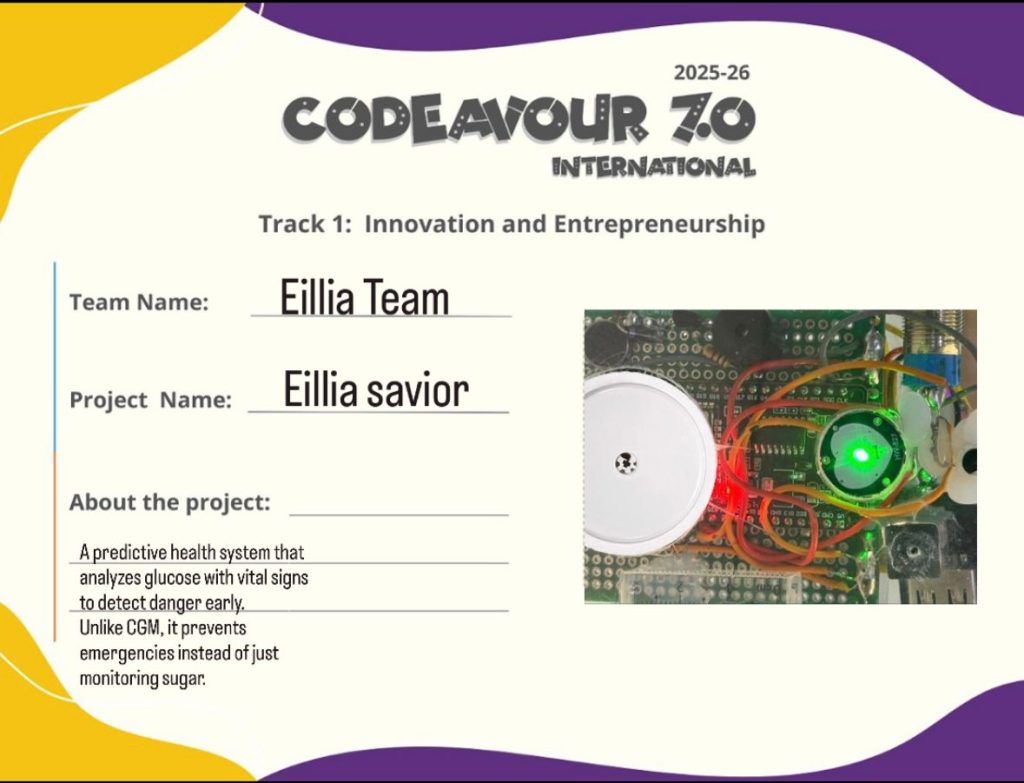
ELIJA Savior is a smart predictive health monitoring system designed to improve the safety of diabetic patients. Unlike traditional CGM systems that only measure glucose levels, this system monitors multiple vital signs such as glucose, heart rate, body temperature, and body movement to provide a more complete understanding of the patient’s health condition.
By analyzing the interaction between these parameters, the system can detect dangerous patterns early, such as sudden glucose drops combined with abnormal heart rate or movement, which may indicate an upcoming medical emergency. It can also predict and detect falls, a common risk for diabetic patients during hypoglycemia.
Through IoT cloud connectivity, the system sends real-time alerts to caregivers or family members, helping reduce response time and prevent severe complications. The goal of ELIJA Savior is to shift diabetes care from reactive monitoring to proactive protection by identifying risks before they become life-threatening.
BioWare
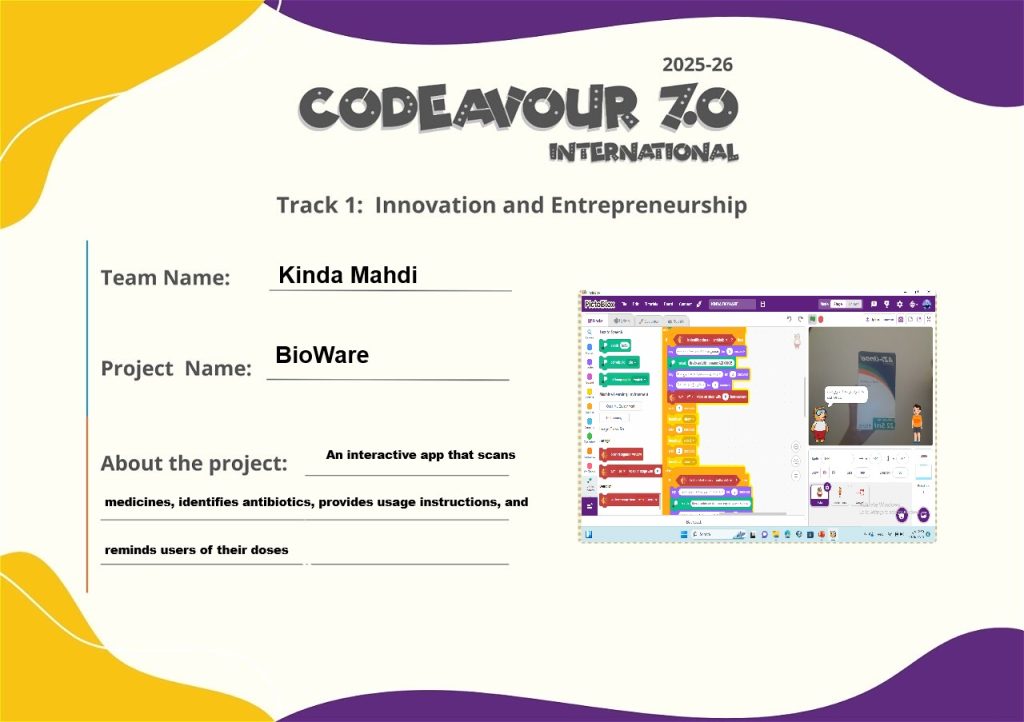
My project is an educational application about antibiotic resistance developed using PictoBlox. The main goal of this application is to raise awareness about the correct use of antibiotics and reduce misuse that leads to antibiotic resistance. The app helps users identify whether a medicine is an antibiotic, provides guidance about proper usage, and asks important questions such as whether the patient has a penicillin allergy. It also includes an interactive quiz to increase awareness engagingly.
However, PictoBlox does not fully support real mobile features such as background notifications and daily reminders. The reminder works only when the program is open because PictoBlox does not function as a complete mobile operating system. Therefore, this project represents a prototype.
In the future, the application can be expanded by establishing a user database connected to the system. Each patient (user) will have a personal profile. This will help generate statistics and reports about antibiotic usage patterns and contribute to better awareness and healthcare planning.