
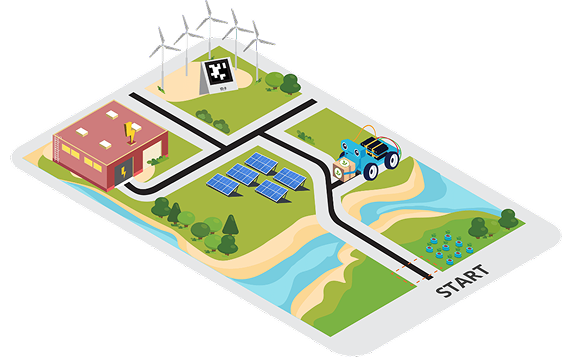
Embark on an exciting journey where students combine the power of AI, robotics, and sustainable thinking to solve real-world energy challenges. In this inspiring track, participants will design and build robots using Quarky and program them with PictoBlox to complete 6 innovative challenges focused on clean energy generation, conservation, and smart energy management for a sustainable future.
Step into a sustainability-focused arena where young innovators harness the power of AI and robotics to tackle real-world clean energy challenges and create solutions for a greener future.
Participants design robots using the Quarky series (Quarky and Quarky Intellio) and program them with PictoBlox to complete intelligent missions focused on renewable energy, energy conservation, and smart energy management. Through challenges like waste-to-energy conversion, solar deployment, and efficient energy distribution, teams use creativity and technology to build solutions for a cleaner and more sustainable future.
Our wellness lab is preparing your dose of resources—stay tuned!
Guided lessons and training material to learn programming in an interactive manner.
Explore the arena and arena setup guide of Track 2: Clean Energy AI-Robo Challenge
Gear up for victory! Read the official rules and guidelines for Track 2: Clean Energy AI-Robo Challenge
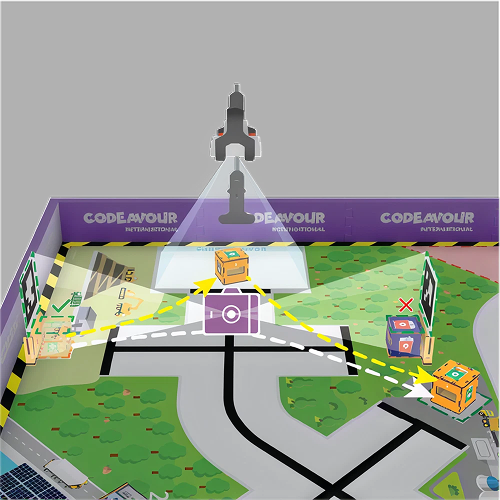
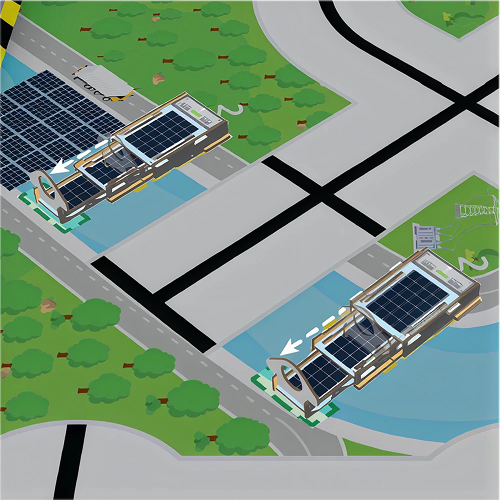
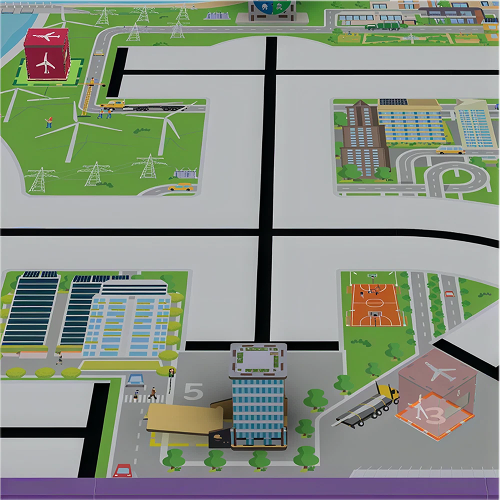
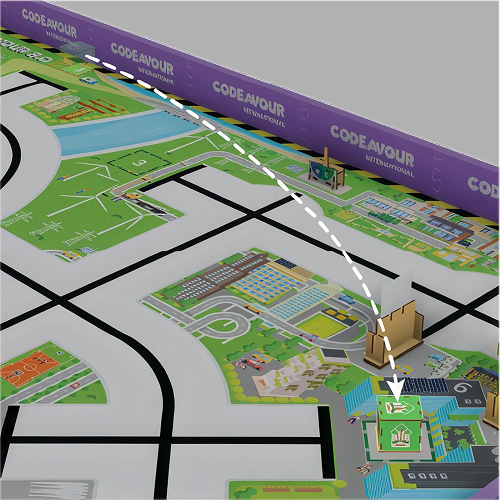
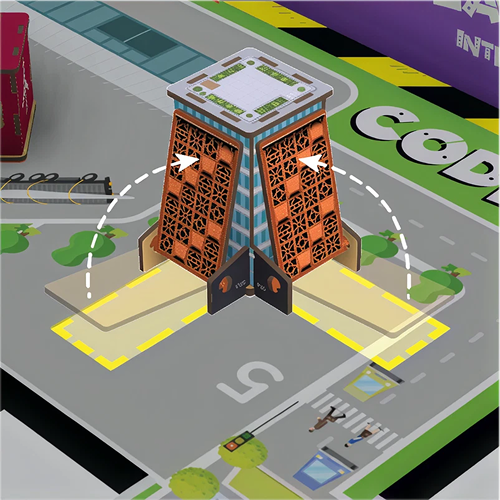
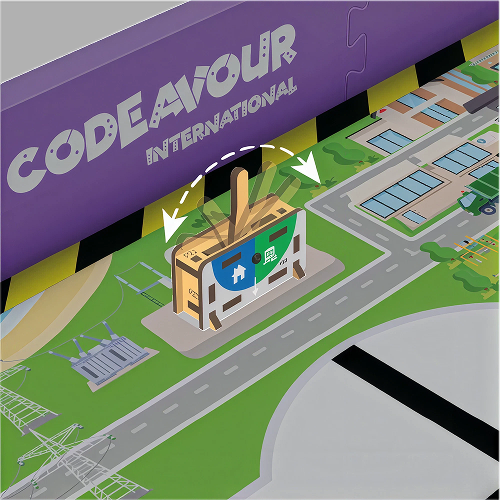
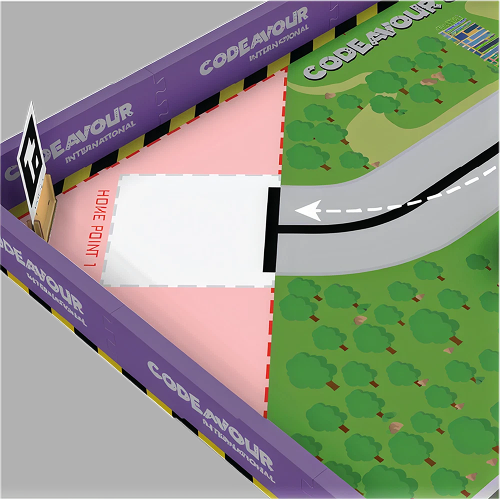
Welcome to the Clean Energy AI-Robo Challenge Arena, where young innovators use AI and robotics to tackle real-world clean energy challenges. Explore the interactive 3D arena from every angle, discover key mission zones, and understand how each challenge comes to life on the field. From transforming waste into energy and deploying renewable energy solutions to balancing smart power grids, get familiar with the arena and prepare your strategy for a cleaner, more sustainable future.
Discover the six exciting missions of the Clean Energy AI-Robo Challenge, where your AI-powered robot takes on real-world clean energy and sustainability challenges across the arena.

Registrations opening soon for Codeavour 8.0

Develop skills with interactive sessions and boot camps

Participate in Regionals and Nationals Events

Compete and Win at International Showdown

Participate in your nearest
regionals

Show your skills
at the national level

Represent your country at
an international platform
For participating in Codeavour International, the registration is divided into two stages:
Scholarships are available for underrepresented students. For more details, contact [email protected], fill out the form or reach out to an authorized partner.
These tutorials provide an introduction to working with Machine Learning (ML) models in PictoBlox with Block coding.
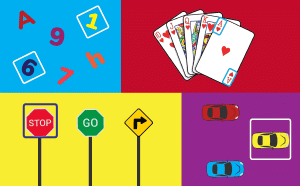
AI to identify pretrained recognition cards like signs, numbers, and other objects.
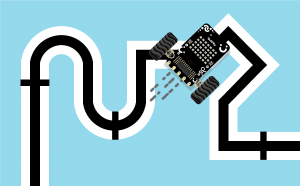
The extension helps you to speed up your quarky in the line following using blocks and Python functions.
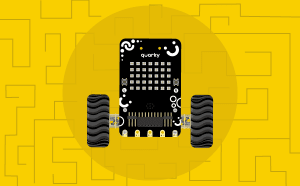
Controls robot movement and line-following, motor, and servo operations.
(7 - 10yrs Old)

(11 - 14yrs Old)

(15 - 18yrs Old)

General Information
Codeavour 8.0 International, Track 2 – Clean Energy AI-Robo Challenge is a physical AI and robotics competition.
Robot’s Control Mode
Elementary: Robots may be manually controlled or autonomous.
Junior & Senior: Robots must be fully autonomous while performing the challenges.
All robots must be designed and built by the participating team.
AI & Recognition
Some challenges require the robot to recognise or identify objects before completing the task.
The following recognition methods are allowed:
Elementary: Recognition Cards, self-trained Machine Learning models, or AprilTags.
Junior & Senior: Self-trained Machine Learning models or AprilTags.
If a challenge requires recognition, completing it without using an allowed recognition method will result in zero score for that task.
Skills Developed
Track 2 helps participants develop their skills and creativity in:
Before the Match:
Here are some key points that participants must be aware of before the match
Game Field:
The Track 2 arena contains different mission zones, pathways, game objects, deployment areas, and Home Points associated with the six Clean Energy AI-Robo Challenges.
Robots must perform the required tasks within the designated areas according to the challenge rules.
Some game elements and object positions may be randomised before a match, so teams should design their robots and strategies to handle different arena configurations.
Important game field dimensions:
Teams should refer to the official Arena Setup Guide and Track 2 Rulebook for exact arena dimensions, object positions, markings, randomisation procedures, and challenge-specific requirements.
Track 2 invites participants to design, build, and code AI-powered robots to tackle real-world clean energy and sustainability challenges across the arena. Participants will apply their robotics, AI, coding, and problem-solving skills to complete missions involving renewable energy, energy management, and sustainable solutions.
Track 2 is open to participants in three age groups:
The maximum team size is three members and one mentor.
Participants must only use ” Quarky ” or ” Quarky Intellio” to design and build their robots.
Any battery that is compliant with standard safety norms is acceptable, and a maximum voltage of 5 volts between any two Robot terminals is allowed.
The robot’s size must not exceed 20x20x20cm (LxBxH) and should weigh a maximum of 1kg. However, it can expand while in the game.
Participants may build their robot using any materials and components that comply with standard safety requirements. The robot must use a Quarky Series (Quarky and Quarky Intellio) controller as the main controller and must meet all the technical specifications, safety requirements, and inspection guidelines outlined in the competition rules.
Each team must have one dedicated robot for the competition. Teams are not permitted to share their robot with another team. Sharing a robot between teams may result in disqualification.
The scoring criteria for Track 2 are based on several factors:
The total game time depends on the team’s age category:
The timer starts after the randomisation process for Challenges 1 and 6 is completed and the Judge/Volunteer gives the start signal. The timer continues running throughout the match and will not be paused. Teams must complete as many challenges as possible within the allotted time; unfinished challenges will not receive points once the timer expires.
Note: The stopwatch timer is not paused once the round has started under any circumstances.
Referees and volunteers will oversee the competition, ensuring rules are followed, scoring is accurate, and assistance is provided where needed.
Game objects will be placed in their designated positions according to the arena setup before the match. However, some objects may be moved or repositioned as part of a challenge or due to robot interaction. Teams must not deliberately modify the position of game objects unless permitted by the challenge rules or Home Point rules.
In case of an unexpected collision, the Judge/Volunteer may restore any displaced game object to its position immediately before the collision, as specified in the Foul and Corrective Action rules.
There will be another tiebreaker round for those who have a tie in both best score and time.
The Unique Mechanisms and AprilTags will be placed at their designated positions as per the arena setup. Teams must not intentionally move, remove, or modify them unless the relevant challenge specifically requires the robot to interact with them.
Accidentally knocking over or moving an object due to an unexpected collision is not automatically considered a foul. The team may call out the incident and follow the applicable Unexpected Collision and Corrective Action rules. Any displaced object may be restored by the Judge/Volunteer to its position immediately before the collision.
Intentional interference with arena components or game objects outside the permitted challenge actions may result in a foul or termination of the round.
The timer will not be paused for any reason once the round commences. Teams are responsible for resolving any encountered issues within the round duration.
Teams may modify or update their code during the competition, including during the Practice Round and Main Round, subject to the competition rules.
For challenges that require AI-based recognition, the required recognition process must be properly implemented and executed. Teams must not hardcode the result or bypass the required recognition step. Bypassing the required recognition process will result in zero score for that specific challenge.
Teams may also prepare and execute their code in separate parts or sequences to perform challenges from a line-following junction, as permitted by the competition rules
Yes. Elementary teams may control their robot manually using Dabble or PictoBlox on a computer, provided the control method is compatible with the robot and competition setup.
However, Junior and Senior teams must operate their robots fully autonomously throughout the competition and cannot use manual control through Dabble, PictoBlox, or any other control method.
The robot’s initial dimensions must not exceed 20cm x 20cm x 20cm (Length x Breadth x Height). Expansion is permissible once the robot departs from the starting position. The robot may maintain any expanded size or position when returning to a home point or utilizing a teleportation mechanism between home points.
No. Only a wireless connection is allowed between the robot and the connected device during the competition. However, for the recognition-based Challenge 1, teams will be provided with a wired webcam that may be connected to their device for recognition.
Yes. Teams may use Intellio or another compatible camera module with the Quarky for recognition. However, Quarky must remain the main controller board of the robot.
Yes. Teams may use Intellio as the main controller of their robot. They may use Intellio along with compatible expansion boards, provided that Intellio remains the main controller throughout the competition.
Yes. Teams can complete Challenge 6 without an onboard camera by using suitable sensors, such as ultrasonic sensors, IR sensors, or other compatible sensors, to detect and navigate around the AprilTag poles as required.
Alternatively, teams may use an onboard camera, such as Intellio, to detect and identify multiple AprilTags from a distance and make decisions accordingly. The choice of sensors and recognition method depends on the team’s robot design and strategy.