
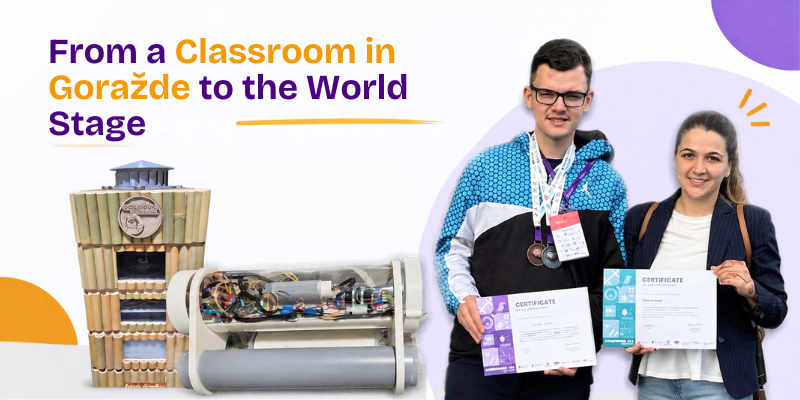
A robotics competition for kids success story from Codeavour
Ahmed Gušo’s first project in a robotics competition for kids was a Wind Sensor Alarm, built while he was still learning the basics of robotics and programming.
Four years later, he arrived at the Codeavour 7.0 World Finals in Jakarta with Pando SolarFlow, a solar-powered system designed to monitor air quality and respond when pollution rises.
He won first place.
There were several projects between those two moments. Some reached the podium. One finished fourth. Each pushed Ahmed into a new engineering problem and gave him something else to figure out and share with his classmates at Hasib Hadžović Technical High School, Bosnia.
That progression — not just the final win — is what makes his story worth following for any student weighing whether to enter a robotics competition for kids of their own.
It All Started in Hasib Hadžović Technical High School, Goražde
Ahmed is from Goražde, Bosnia and Herzegovina.
When he entered Codeavour in 2022, he saw it as a chance to test what he had learned about robotics and coding — a way to find out whether his classroom skills held up in an international coding competition.
His first project, Wind Sensor Alarm, finished third at the world level among more than 110,000 participants.
For Ahmed, that result changed his sense of where his work could go.
“I remember realizing something that day: geography does not decide who gets to innovate.”
His path to international competitions also ran through Bosnia and Herzegovina’s Festivals of Work, where young people present their projects and can earn the opportunity to represent their country abroad. It was where Ahmed learned how to present his work and respond to criticism before taking those ideas to a larger stage.
One Project Led to a Harder One
Ahmed kept competing, but he did not keep building the same kind of project. His work became more technically demanding with every entry into the competition.
- 2022 | Wind Sensor Alarm: 3rd place at the world level
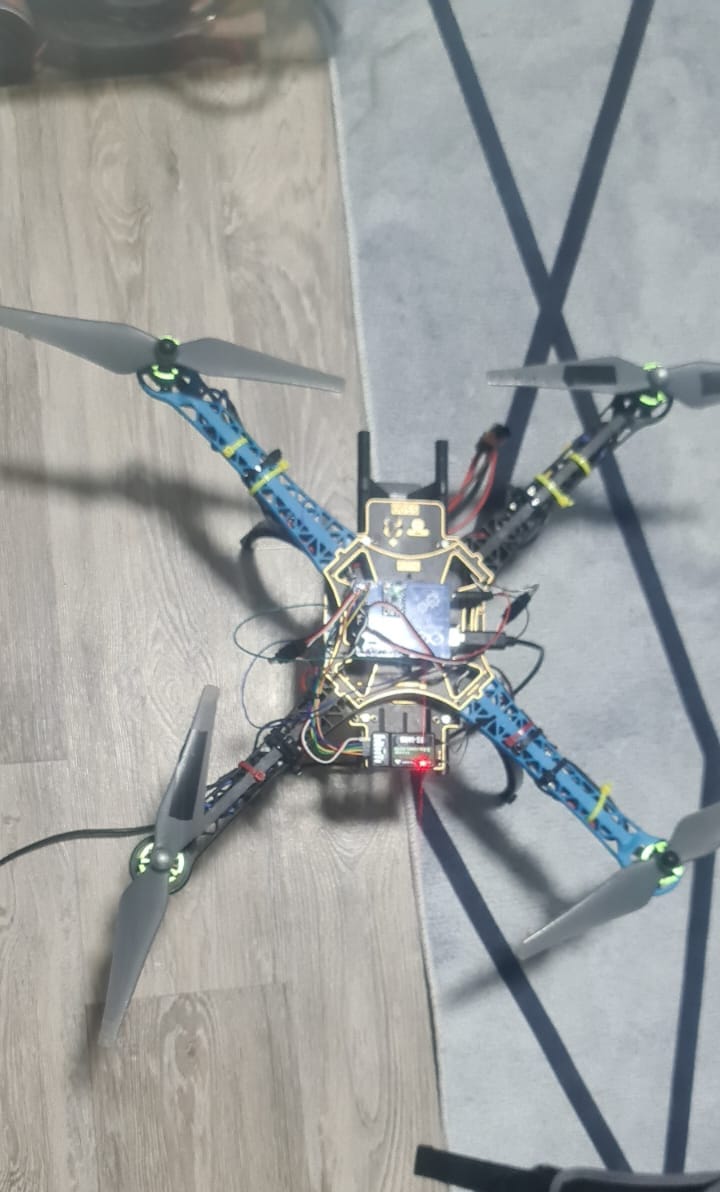
- 2024 | Guardian of the Wild: 2nd Runner-Up at the Codeavour 5.0 World Finals
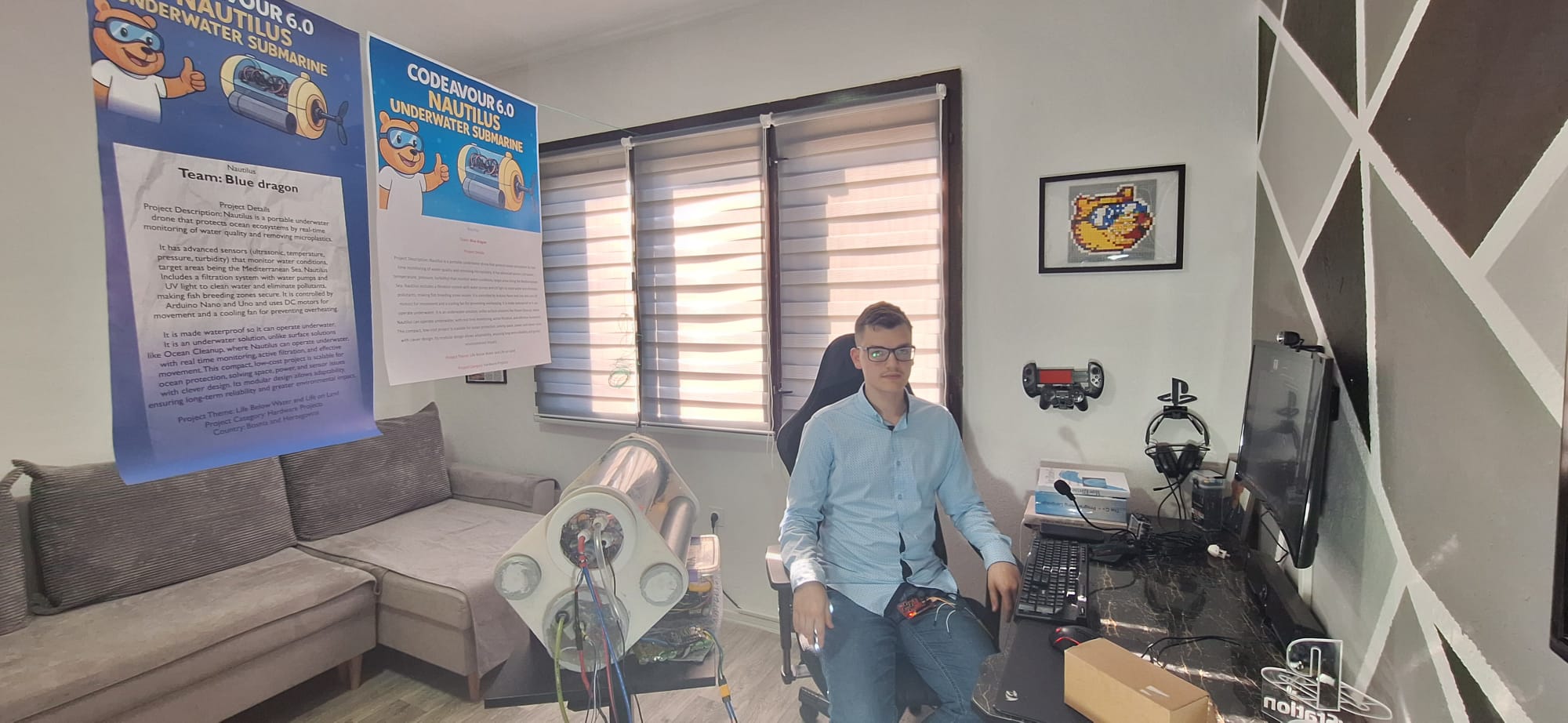
- Nautilus: An autonomous robotic submarine designed to monitor and purify seawater, finishing fourth at the world level
- 2026 | Pando SolarFlow: 1st place at the Codeavour 7.0 World Finals in Jakarta
Nautilus was particularly important in that progression. Building an autonomous submarine meant working with electronics, 3D design, and systems that had to function together — a step up from a single-sensor alarm.
It did not win. But it gave Ahmed experience he could carry into the next build.
That next project was Pando SolarFlow.
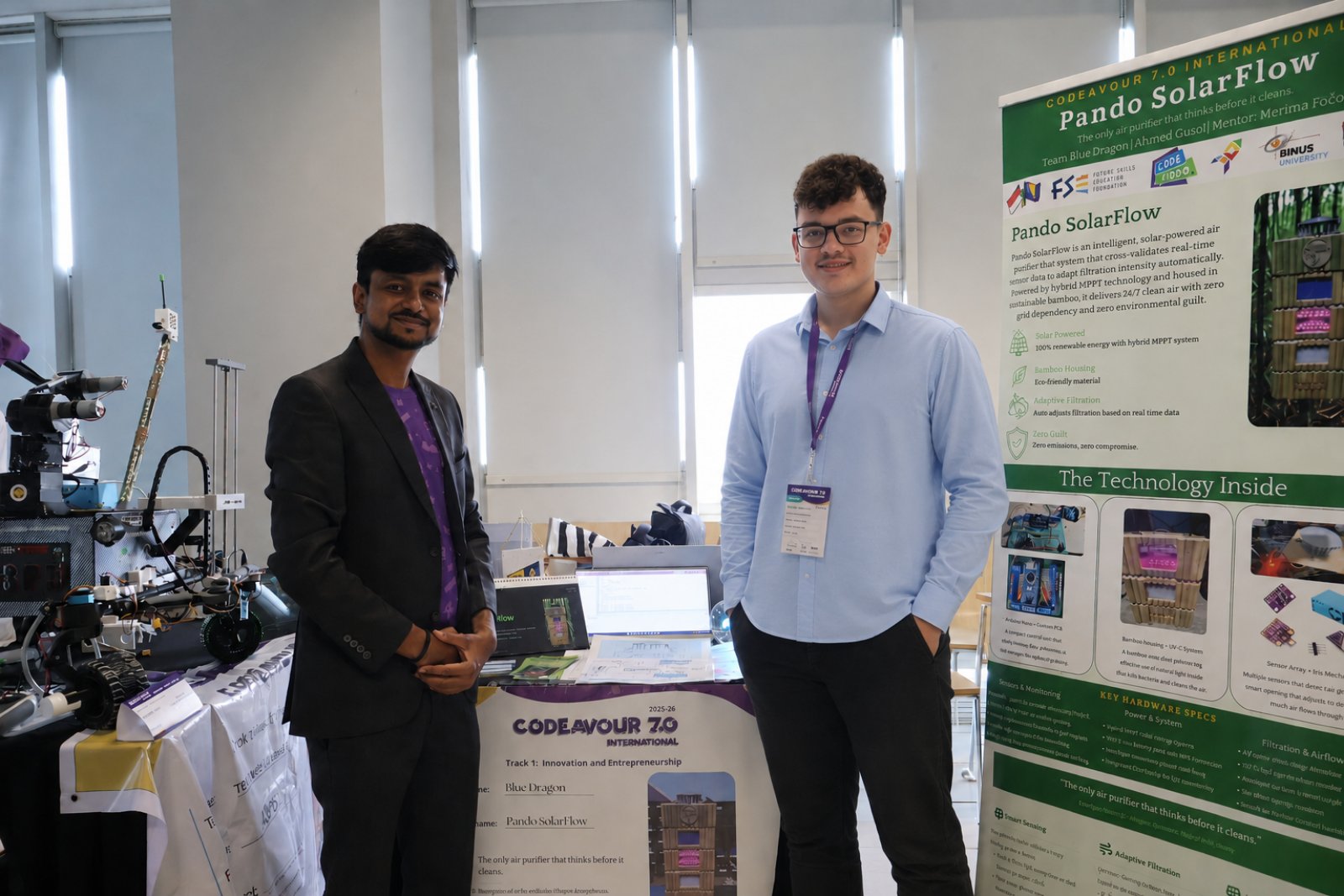
PProject Spotlight: Pando SolarFlow — Built for a Global AI and Robotics Competition
Pando SolarFlow, Solar-Powered Smart Air Purifier
The problem: Air purification can improve indoor air quality, but the system needs to know when pollution is rising and requires a dependable source of energy.
Ahmed’s solution: Pando SolarFlow monitors the surrounding air and adjusts filtration according to changing pollution levels — the kind of sensor-driven logic that’s become a hallmark of strong AI competition entries.
How Pando SolarFlow Works
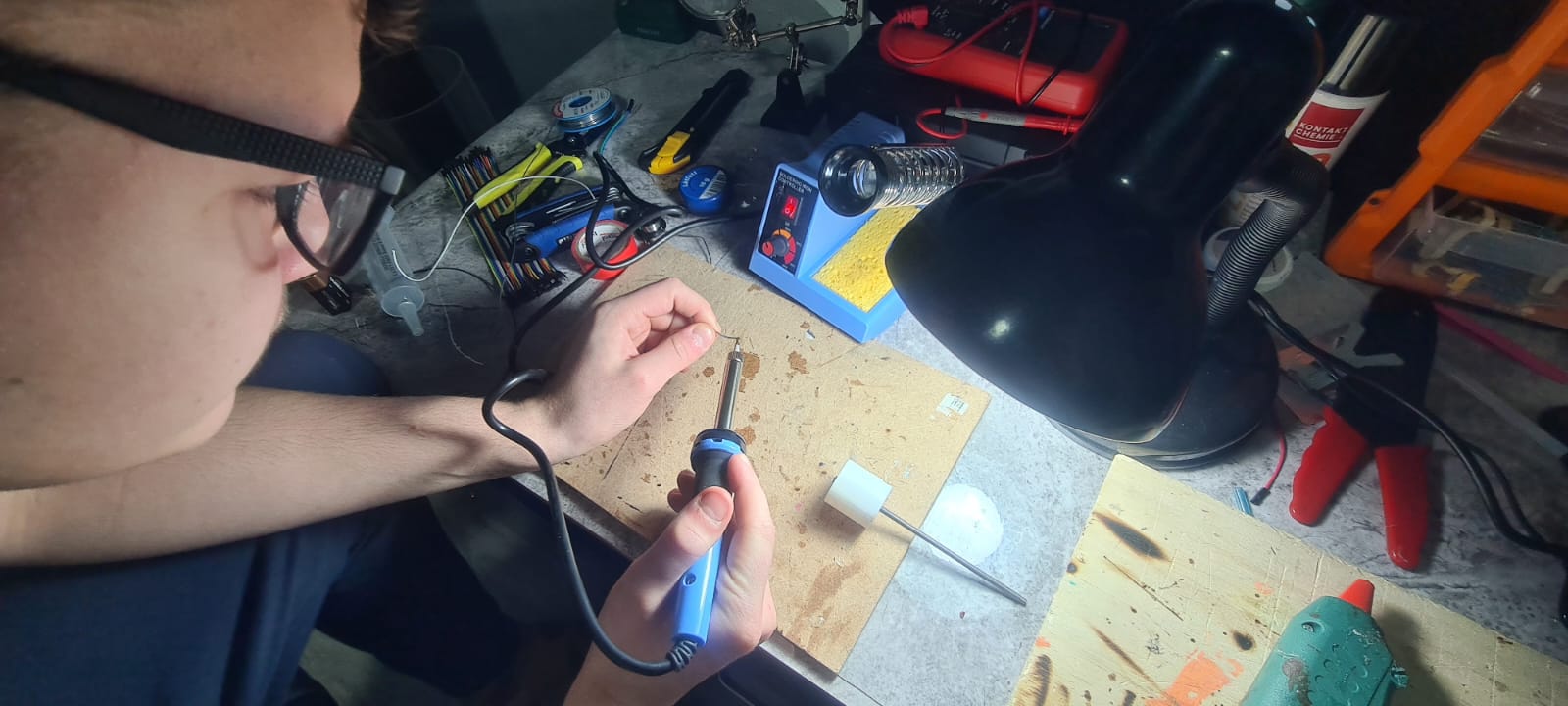
How Pando SolarFlow Works
The system monitors:
- Particulate matter
- Carbon dioxide
- Volatile organic compounds
- Temperature and humidity
Multiple sensors are cross-validated before filtration is activated. When pollution levels increase:
- A mechanical iris adjusts its opening
- Controlled airflow changes the filtration intensity
- The system responds according to the air-quality readings
The goal is not to run the purifier at the same intensity all the time — it responds to what its sensors detect.
Powered by Solar Energy
Ahmed also had to think about how the purifier would be powered. Pando SolarFlow uses a hybrid MPPT solar charging system connected to a lithium-ion battery. Solar energy charges the battery, while stored energy helps the system keep running when direct solar power isn’t available.
Part of its structure is made from bamboo, reducing reliance on higher-impact structural materials.
The result is one system built around two connected questions:
How can we improve the air around us?
Can we do it using renewable energy?
Then Came Jakarta
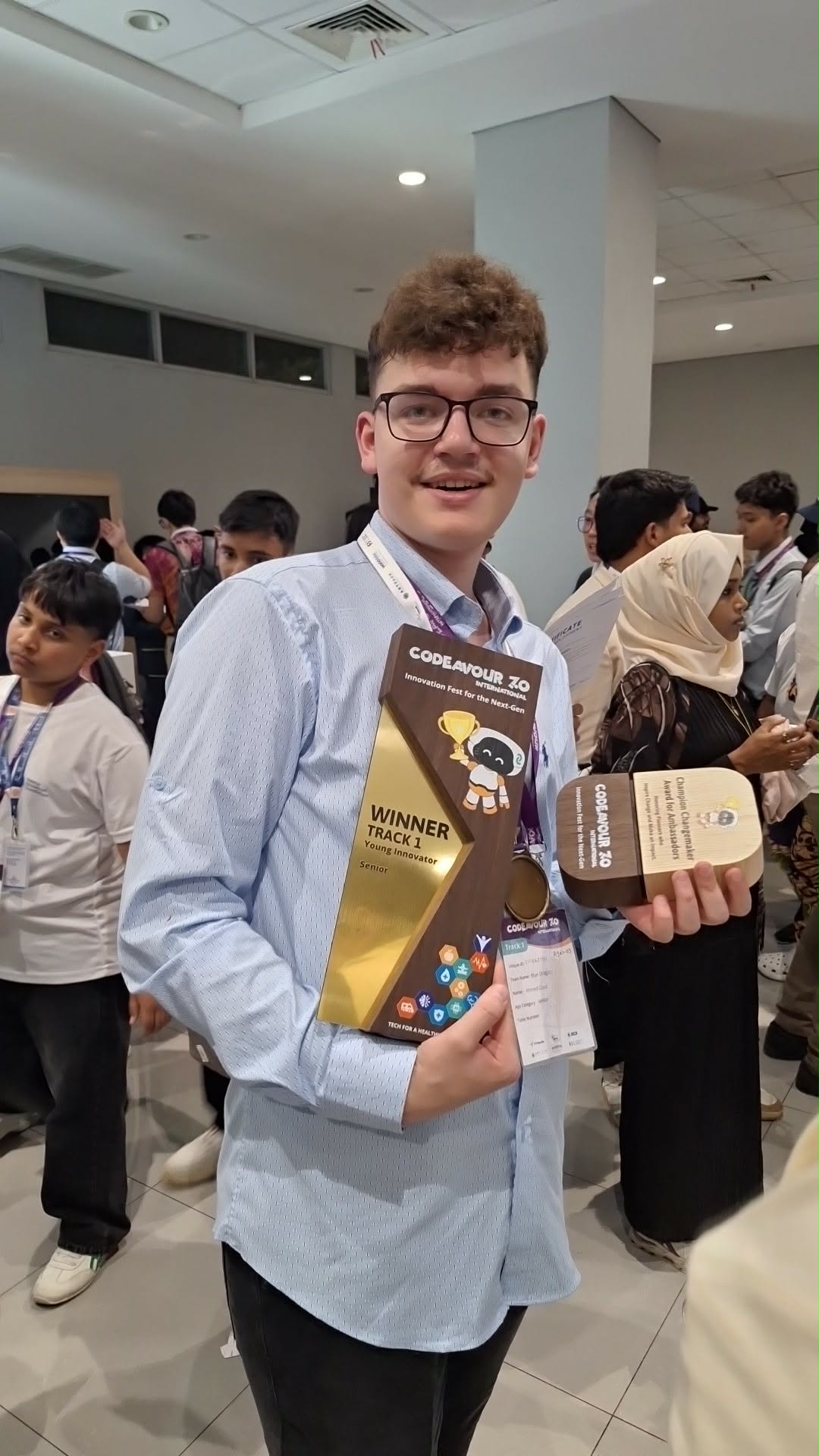
Ahmed presented Pando SolarFlow at the Codeavour 7.0 World Finals in Jakarta — one of the largest robotics and coding competition events for students anywhere in the world.
He won first place. At the same event, he was recognised as the Best Ambassador of his country.
The win came after years of returning to competitions with different projects. His results hadn’t followed a perfect upward line — he’d finished third, later reached another podium, and then placed fourth with Nautilus.
He kept building.
That matters because a robotics competition for kids can easily make the final ranking look like the whole story. Ahmed’s experience shows what happens between competitions: a student attempts a harder project, discovers what doesn’t work, and carries that knowledge into the next build.
He Was No Longer Only Competing
Something else changed in 2026: Ahmed was selected as one of only twenty Codeavour Ambassadors worldwide.
Back in Goražde, he organised workshops and presentations for primary and secondary school students. Through Codeavour’s Become an Ambassador program, he also connected with students outside Bosnia and Herzegovina.
The student who had once entered a robotics competition to test his own skills was now helping younger students begin.
Ahmed describes that shift simply:
“Leadership is not a title. It is the moment you help someone else begin.”
What Every Robotics Competition for Kids Should Teach
Ahmed didn’t start by building Pando SolarFlow. He started with what he could build at the time.
That distinction matters for students looking at advanced competition projects and thinking they need to create something equally complex on their first attempt. A better approach is:
- Start with a problem you understand. Your first project doesn’t need to solve the biggest problem in the world.
- Give every technology a purpose. Sensors and robotics components should do a specific job within the solution.
- Make the next project harder. Use what the previous build taught you instead of starting from zero every time.
- Treat competition feedback as project feedback. A result tells you where one version stands — it doesn’t decide what you can build next.
- Learn to explain your decisions. If you know why a component exists, you’ll find it much easier to present the project to judges.
Ahmed’s projects changed as his skills did. Wind Sensor Alarm came first. Nautilus came later. Pando SolarFlow came after years of building — proof that a robotics competition for kids rewards persistence as much as any single win.
Beyond Codeavour
Ahmed has continued taking his projects to other international platforms. He competed at the International Greenwich Olympiad in London — a STEAM competition affiliated with the youth science network MILSET — where he received a bronze medal, and continued developing projects focused on environmental protection and sustainable development.
The competitions may change. The process of building does not.
Find something worth solving. Build what you can. See where it fails. Then make the next version better.
For Ahmed, that process began in Goražde. It eventually took Pando SolarFlow to first place in Jakarta — one more example of what a robotics competition for kids can set in motion.